
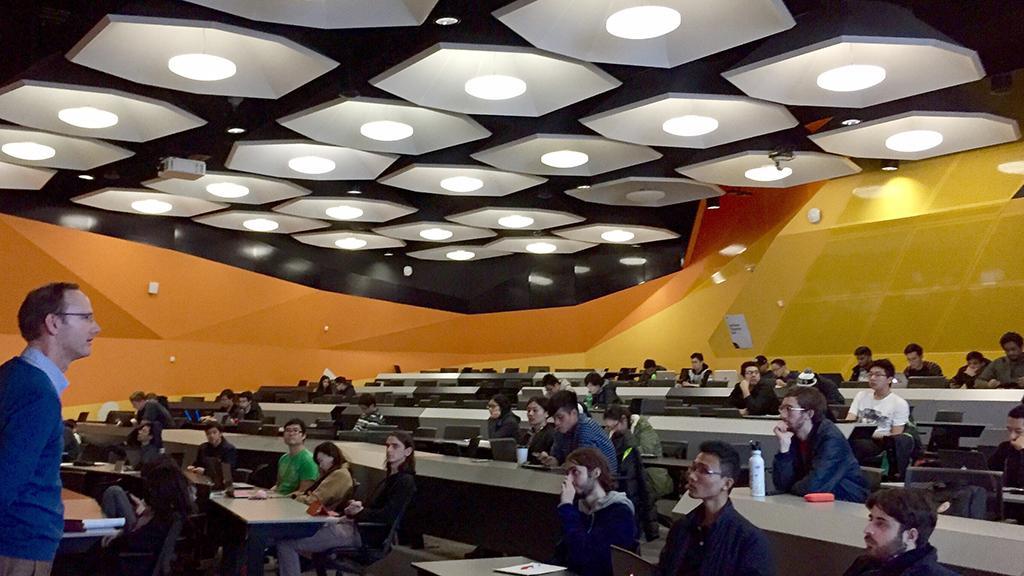
RMIT UNIVERSITY, MELBOURNE. Speaking to undergraduate design students about working in the UX field.
Article based on the presentation Working in UX Design in 2018.
Working in UX Design: A View From Inside the Industry
User experience (UX) design has rapidly become a critical capability inside large organisations. As businesses expand their digital ecosystems, the need for thoughtful, evidence-based design is growing just as quickly. Whether you work client-side within an organisation or agency-side across a range of clients, the demand for strong UX practice has never been higher.
How UX Teams Are Structured
UX teams come in many shapes and sizes. Some organisations operate with small, dedicated crews, while others—such as large banks—may employ hundreds across UX, UI, research, and development. Teams often cover a wide scope: prospective customers, current students or clients, alumni or returning users, and internal staff. Each audience introduces its own behaviours, expectations, and design challenges.
A typical UX function spans roles such as:
- User Experience Designers
- Information Architects
- User Interface and Visual Designers
- Interaction Designers
- Data and Analytics Specialists
Together, these roles collaborate to design, evaluate, and continually improve digital experiences. In larger design organisations, your design role could specialise in one or two of these areas. In smaller ones, designers typically stretch their skills across multiple areas.
Why Good Design Early Saves Money
One of the strongest messages from industry: fixing design problems early is dramatically cheaper. Deferring design decisions into later phases of a project can multiply costs and slow delivery. Investing in design up front reduces rework, improves clarity, and ultimately leads to better products.
Processes and the Rise of Lean UX
Modern UX teams increasingly work using Lean UX, a collaborative, research-driven approach that emphasises speed, trust, and continuous learning. The goal is simple: build things people actually want—and prove it with evidence. Lean UX removes heavy documentation and focuses on rapid cycles of learning.
Most UX work moves through a predictable rhythm:
- Collaboration & Discovery
Workshops, design sprints, and requirements gathering to align teams and stakeholders. - Testing & Evaluation
Usability testing, satisfaction measurement, and lab-based observation. - Analysis & Insight
Turning observations and data into actionable insights. - Reporting & Synthesis
Clear recommendations that guide teams forward. - Design Execution
Everything from sketches and prototypes to finished UI and interaction design.
The Broader Operating Model
UX doesn’t work in isolation. High-performing teams embed themselves across the organisation, working directly with customers, running continuous research, and turning insights into ongoing improvements rather than one-off project deliverables. This is how organisations mature their design capability and deliver better experiences over time.
Leave a Reply