
There’s a particular feeling that comes with sketching through a design problem. Ideas arrive without being summoned — a shape suggests a layout, a line becomes a flow. It’s a thinking process that happens in the hand as much as the mind. So when I first started working with AI design tools, something felt off. I was being asked to describe what I wanted, in words, before I’d had the chance to discover it.
That friction took a while to understand. Early on with Figma’s AI features, I’d attempt to articulate granular changes — and find the output had taken its own interpretation. The gap between what I meant and what appeared was often wide enough to be discouraging. It felt less like collaboration and more like a game of telephone.
What’s changed, though, is worth noting. The ability to attach images has made a real difference. Systems that can see what you’re working with seem to make far more considered decisions. More recently, working with Cursor, the conversations have started to feel genuinely natural — less like issuing commands and more like thinking alongside something. The compute improvements are landing in ways that matter.
But the speed of it all prompts a question I keep returning to. These tools can move you through a design process faster than anything before them. They can also move you in the wrong direction faster than anything before them. Stephen Gates uses the term “plausible noise” — and it resonates. A beautifully rendered solution has a kind of authority that’s hard to argue with, even when it’s addressing the wrong problem entirely. The siren call of something that looks right can pull a team away from the harder question of whether it is right.
That’s perhaps where the real discipline lies. Not in resisting the tools — they’re too capable and improving too quickly for that to be a sensible position — but in being more deliberate about what we bring to them. A strong brief, a clearly framed problem, an honest account of what’s actually been explored before the prompting starts.
In the first week of a project, the most useful thing a design manager can probably do is slow things down just enough to ask: what problem are we actually solving here? What else did we consider? The tools will move fast. The thinking behind them still has to come from us.
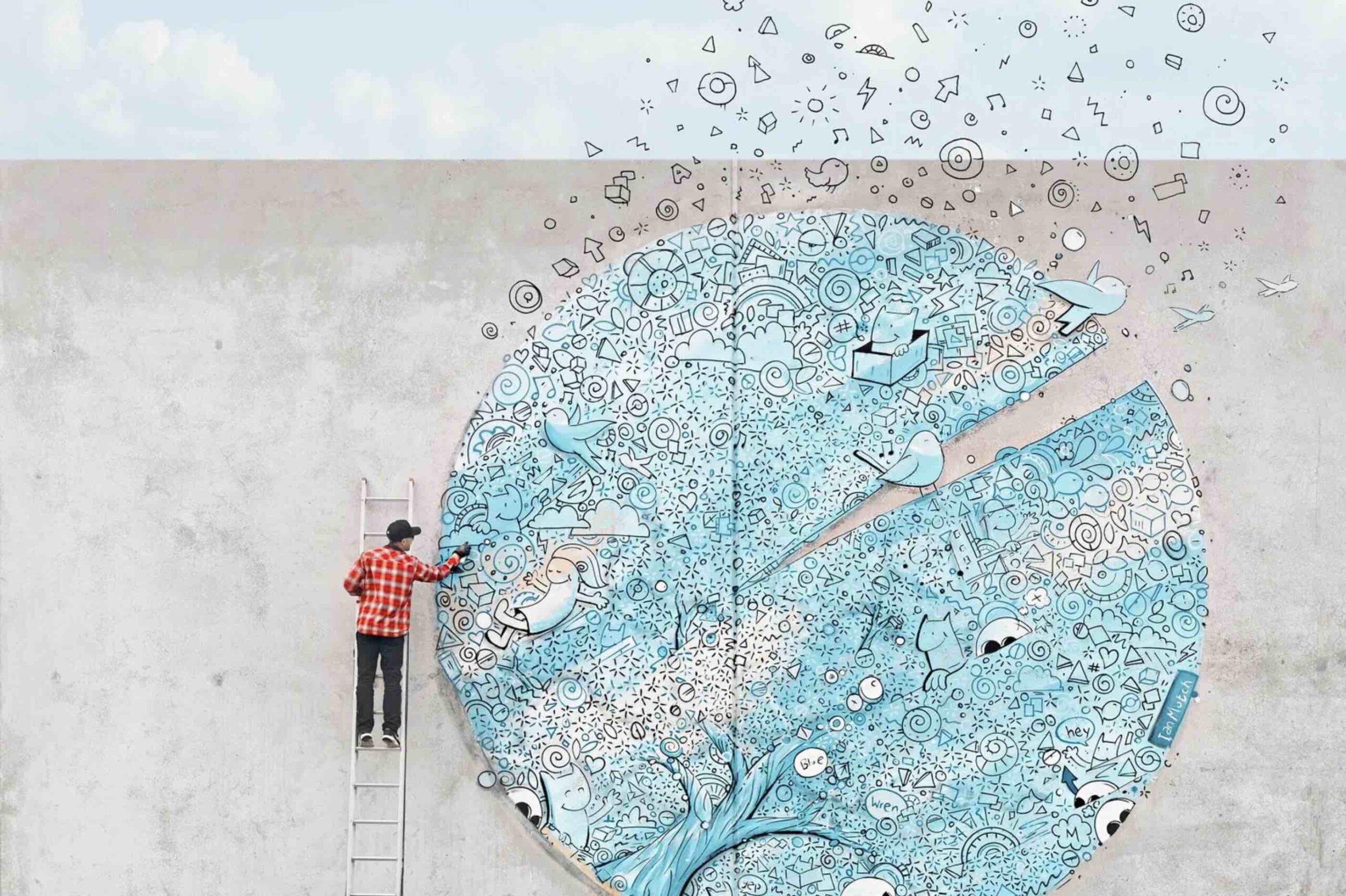
Featured image: Wall mural, Margaret River Region, Australia. Artist Ian Mutch. Photo: Tim Campbell.
Leave a Reply